
Insights
The engineering reasoning behind our equipment specifications, application choices, and case studies — source-cited for every technical claim.

What Aquaphor B510's printed claims do and do not prove
Aquaphor's B510 carbon-block cartridges print a micron sentence and chlorine claims with no test terms, and WQA and NSF searches on 2026-10-02 found no listing under the names searched, so neither reads as a rated result.
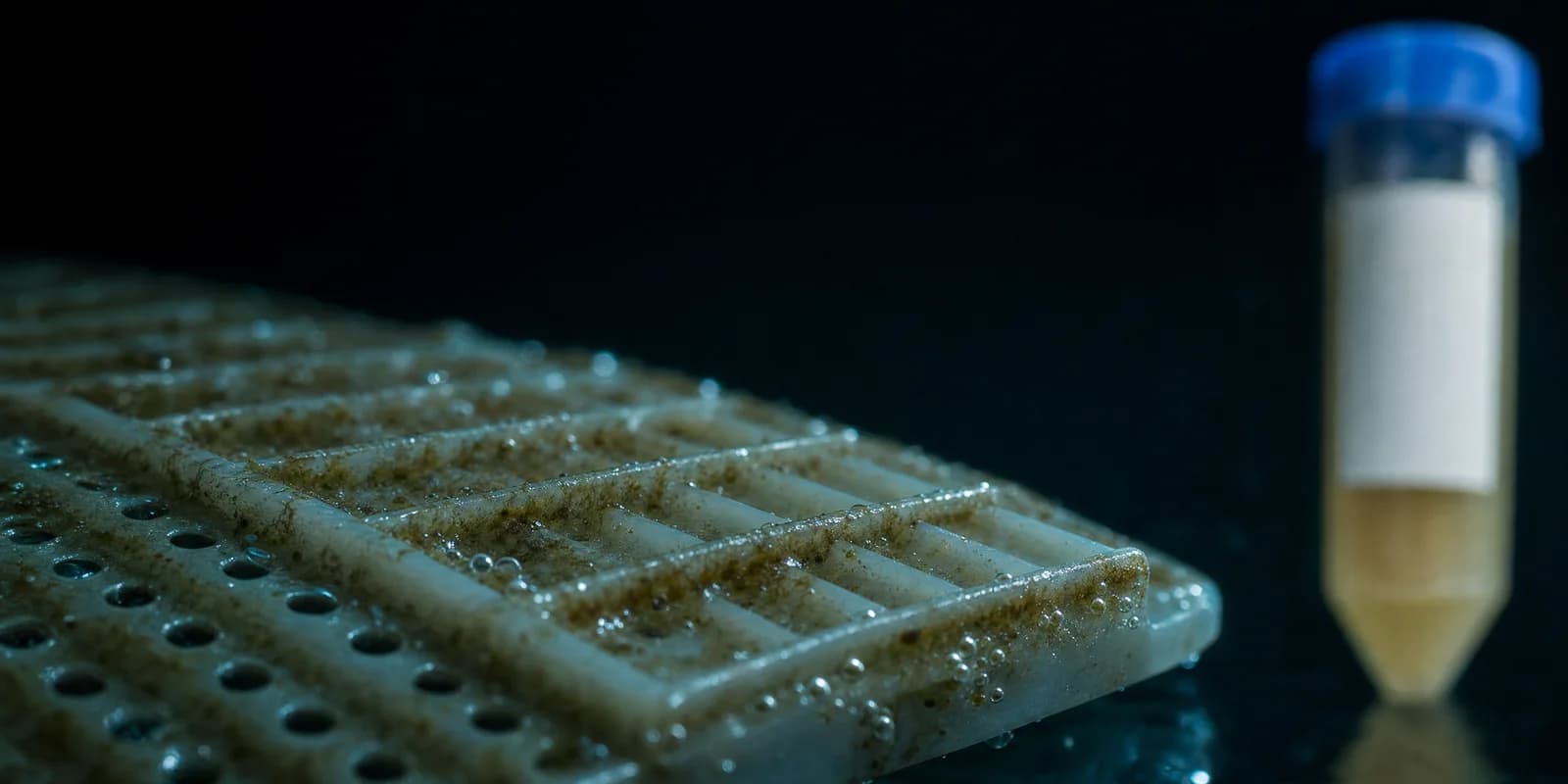
How a dosed WaterDoctor SND culture is shown to work
A farm shows a dosed WaterDoctor SND culture working on four readings, because no document read gives a measurement of persistence or the share of nitrogen removal it supplies.
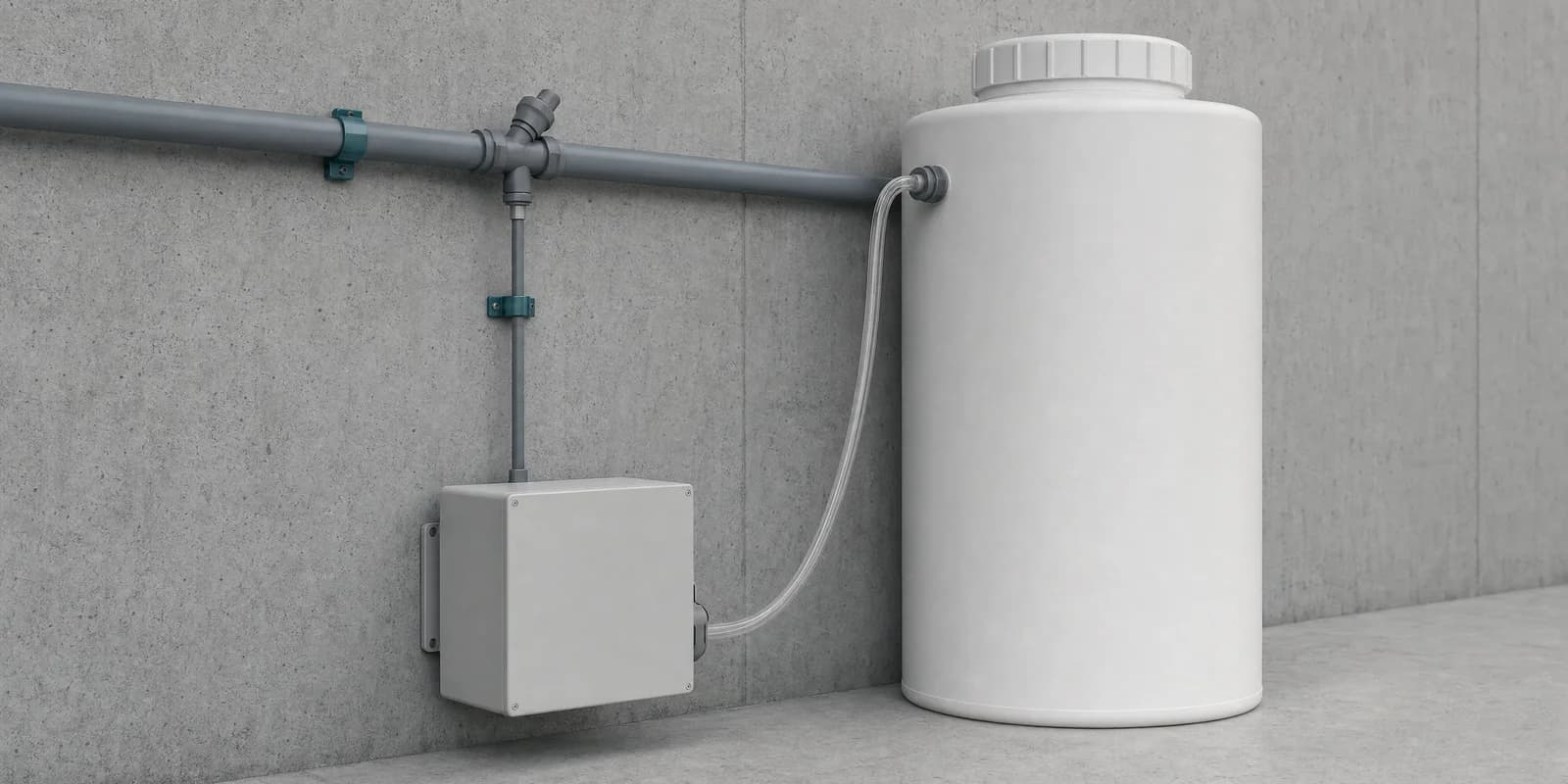
What Blue-White's FLEXFLO A-100N vapor-lock claim proves
Blue-White says its FLEXFLO A-100N cannot vapor lock or lose prime. On this article's reading that holds for the pump head only; in sodium hypochlorite dosing, flow still follows the suction line.
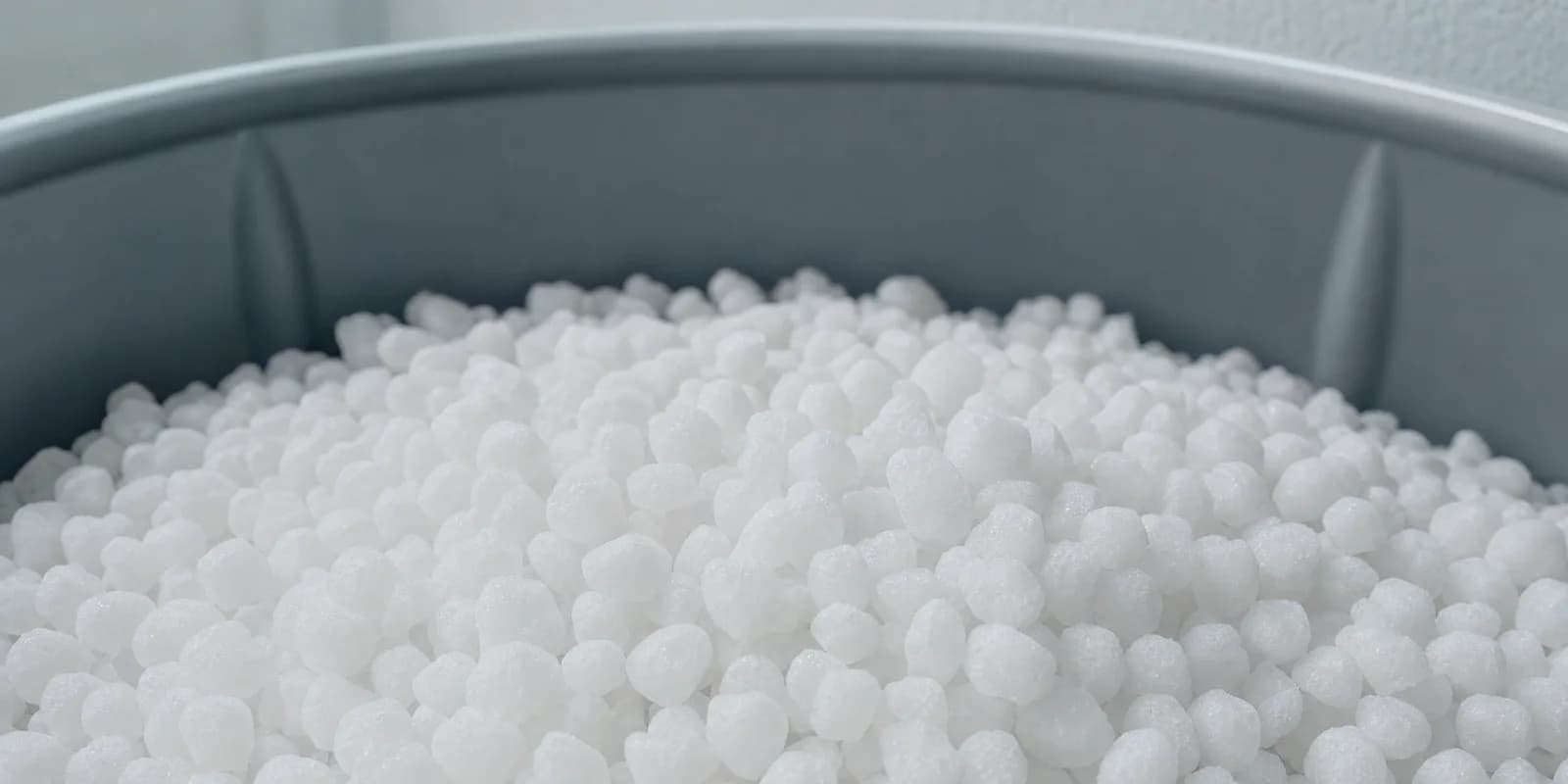
How the EcoWater ECR3702 trades salt for capacity
For household softening, the EcoWater ECR3702R70's 5,310 grains per pound holds only at its smallest salt dose and the service flow; capacity at its largest printed dose is 2.17 times that at the smallest, for 4.13 times the salt.
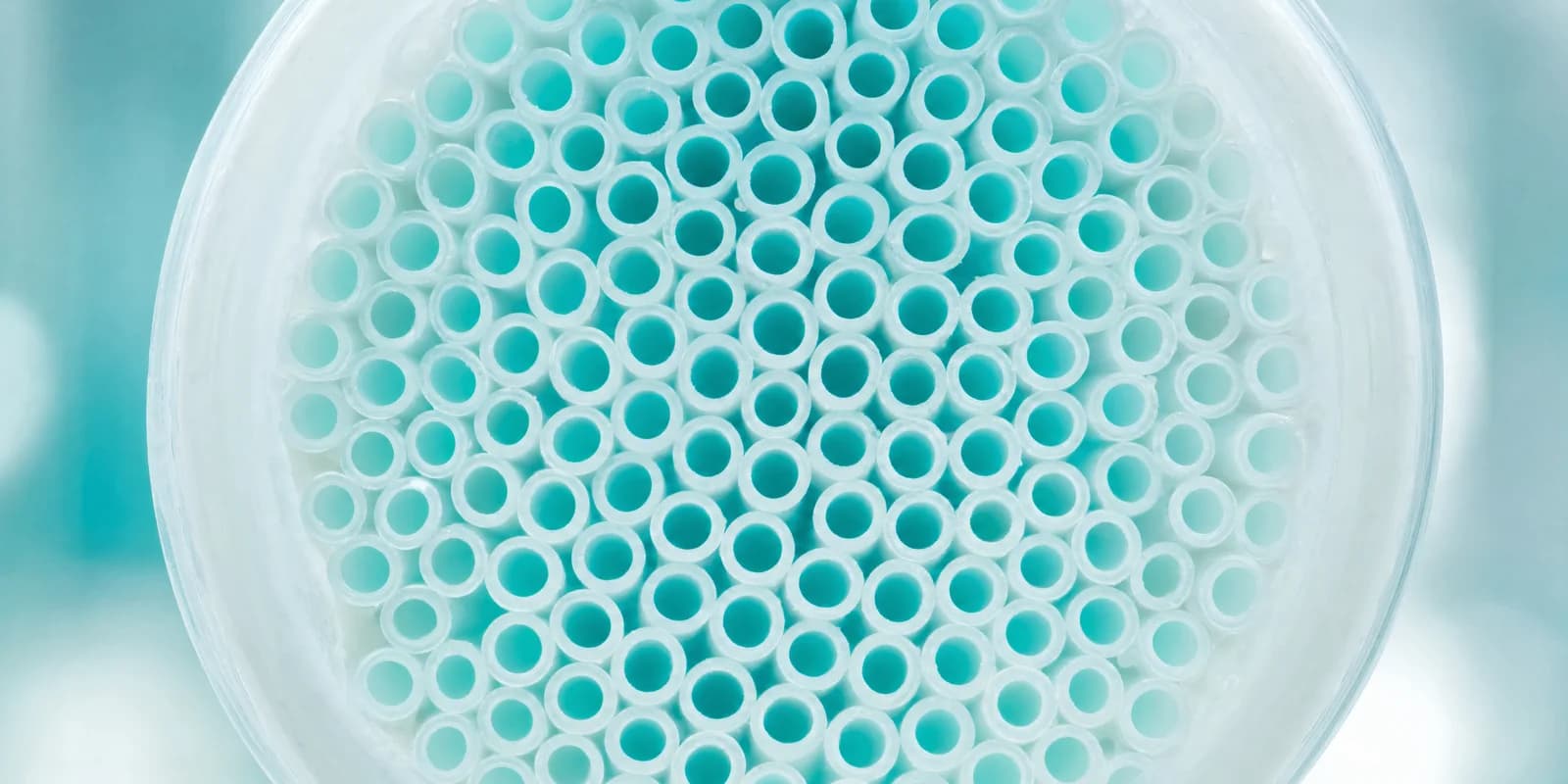
What a 0.01 µm rating means for Litree LH modules
Litree LH inside-out UF modules print a 0.01 µm pore, but the US EPA's rule credits removal from challenge and integrity tests, and none was found for an LH module in the documents read.
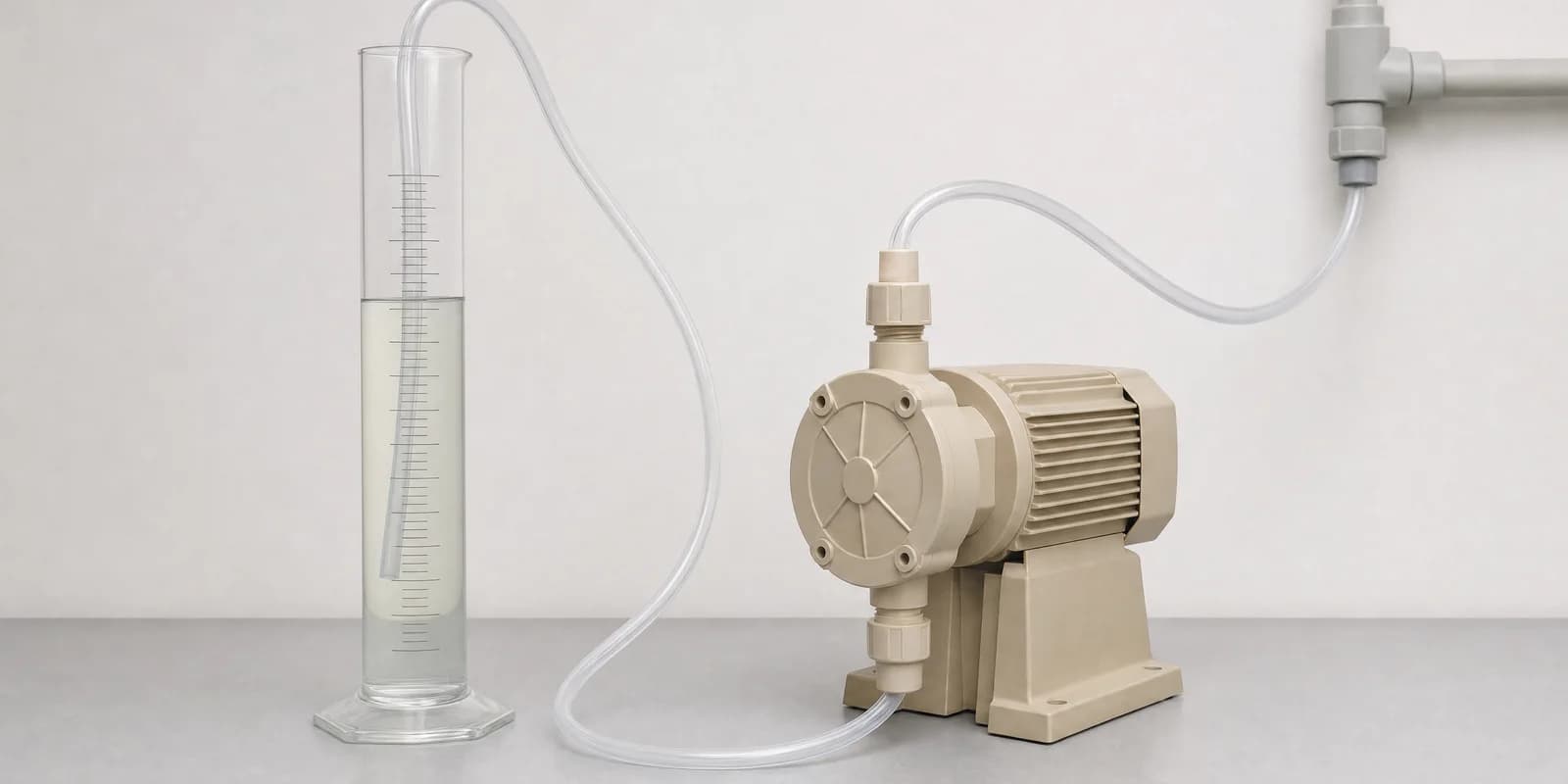
Reading the ProMinent Sigma X accuracy figures
For hypochlorite dosing with a ProMinent Sigma X S1Cb, the web precision statement and the manual's Precision table differ in figure and conditions. Calibration at operating pressure shows volume per stroke, not dose.
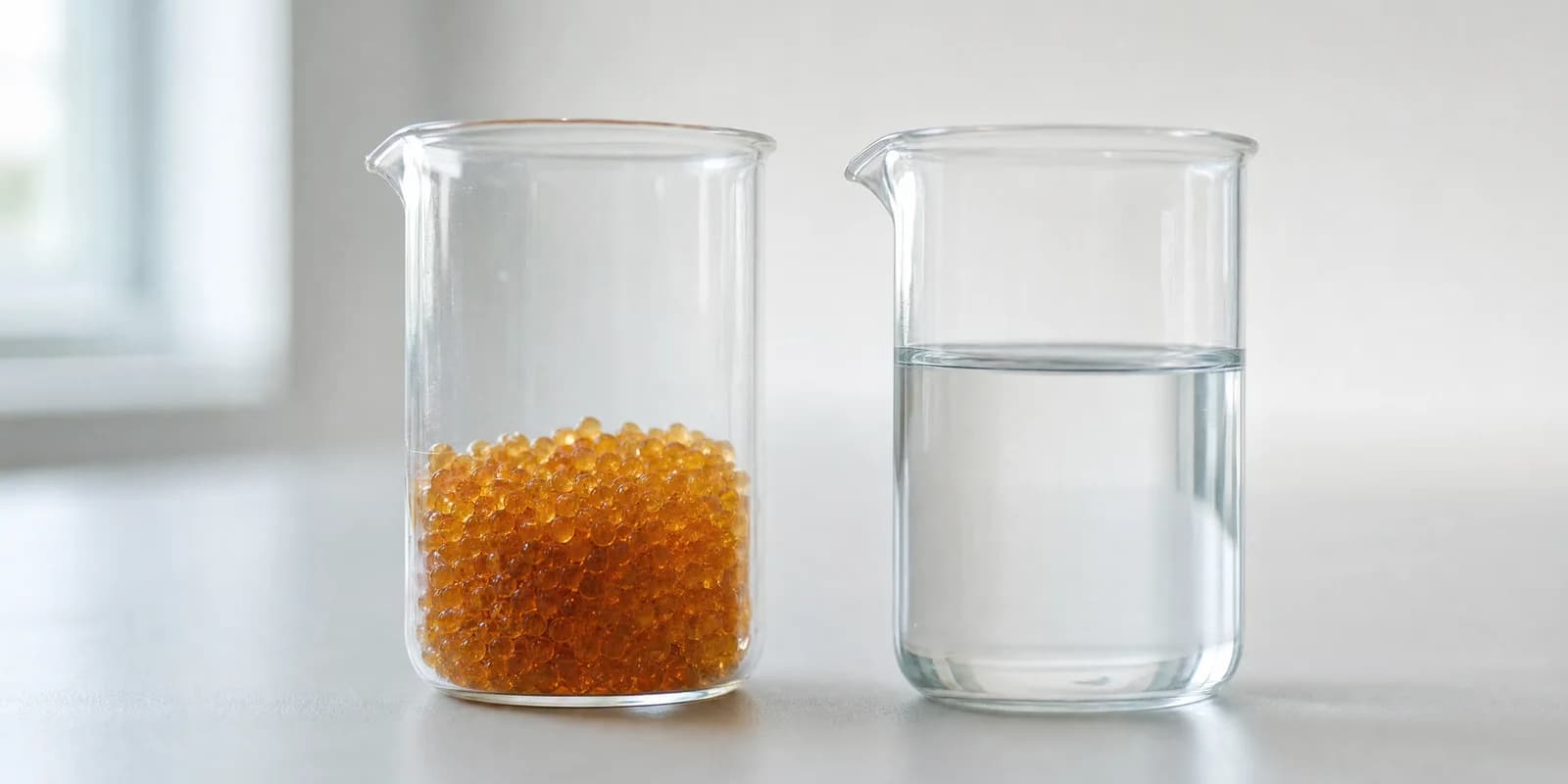
How the Runxin F112A3 valve runs a regeneration
On the Runxin F112A3 the resin softens and the valve sequences; by this article's arithmetic, its default 10-minute fast rinse gives a φ1200 tank 1.92 bed volumes, below the manual's 3 to 6, at the maker's tested 0.3 MPa.
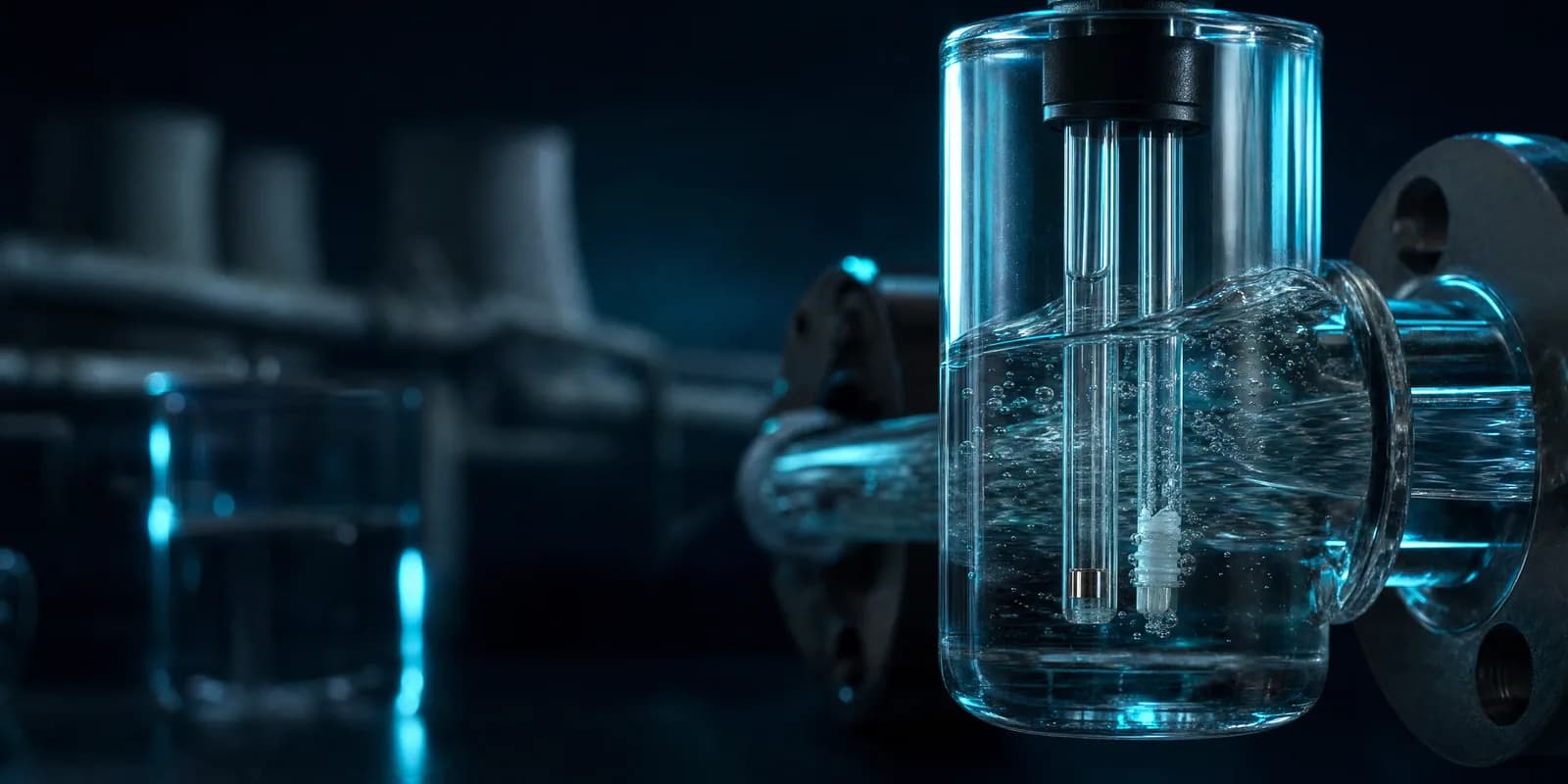
What SEKO Kontrol 800 ORP and conductivity readings mean
On a cooling tower, the SEKO Kontrol 800 L05 gives ORP in mV, not chlorine or bromine ppm, so an ORP setpoint needs a residual-test correlation on that tower's water.
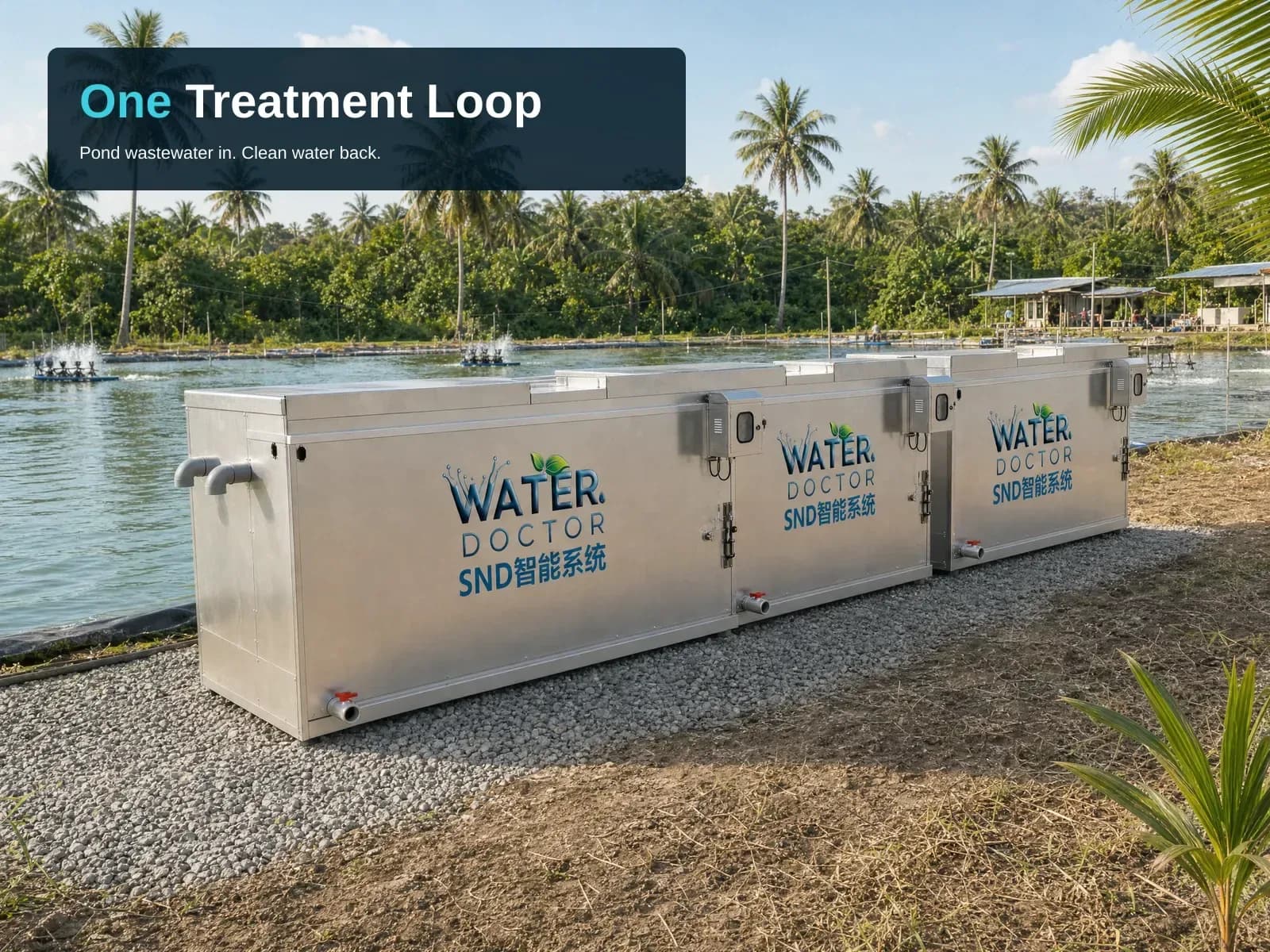
How to prove SND in WaterDoctor's SND Container System
No removal rate, retention time or oxygen setpoint is published for WaterDoctor's SND Container System, so SND there is proven by a total-nitrogen balance, not ammonia.
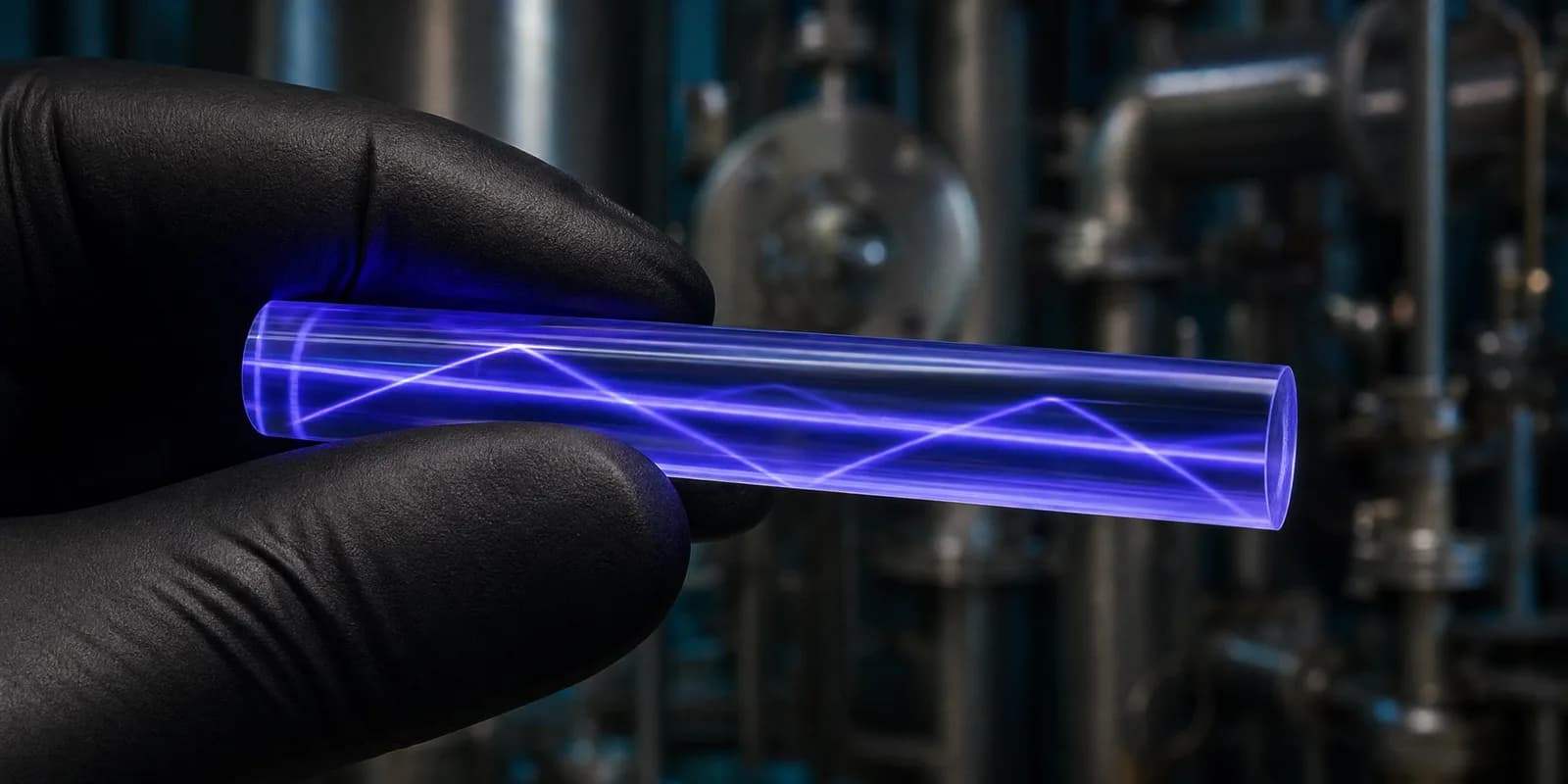
How Atlantium HOD UV Works and What Proves It
Atlantium claims an even dose from Total Internal Reflection, but the one certificate retrieved covers only the RZ104, inside a window of flow, UVT and lamp power. Check delivered dose against site readings.
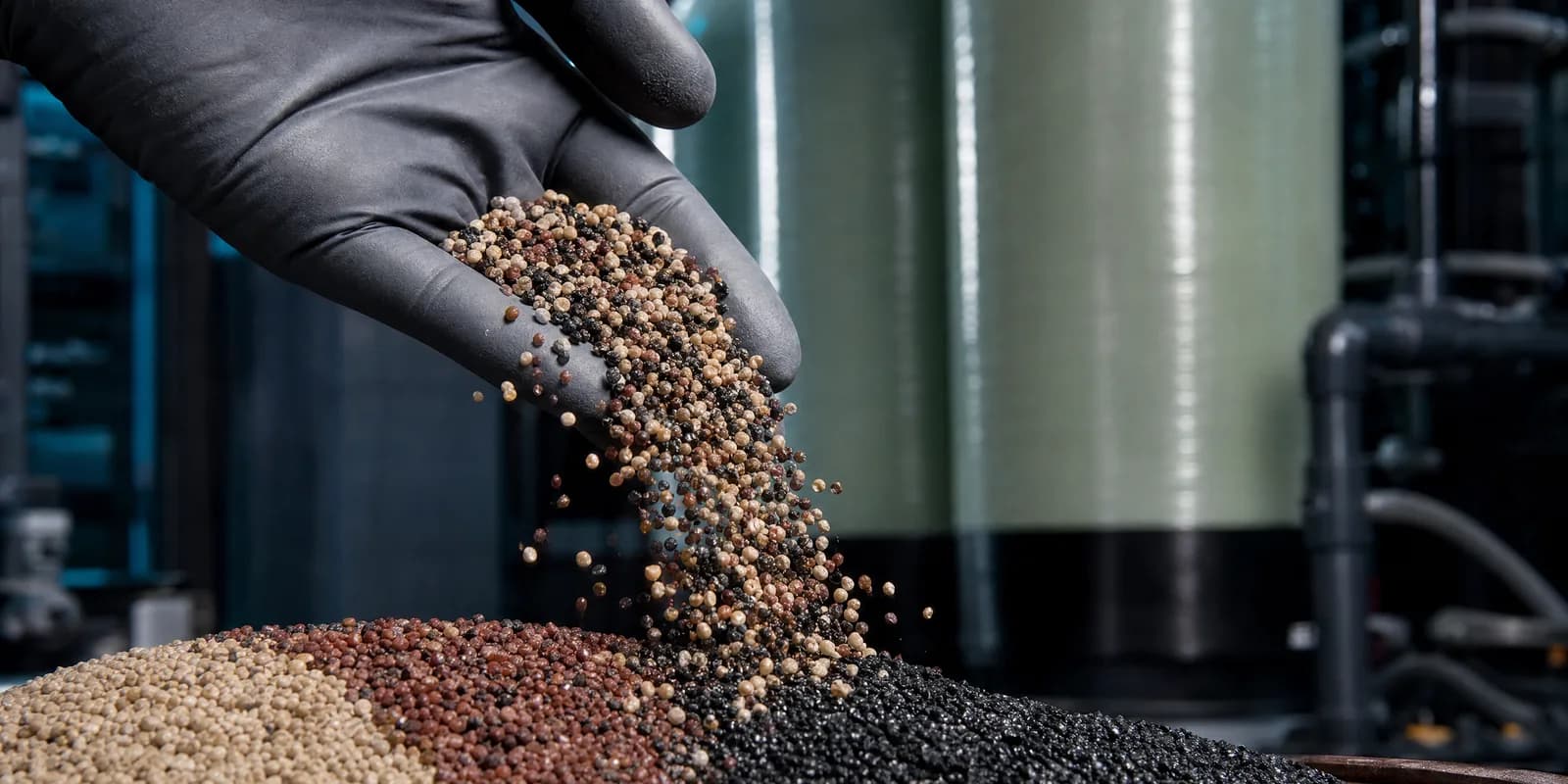
Culligan CTM depth filter mechanics and published limits
Culligan's brochure states 10 microns for depth filters with no published method, and the CTM's pressure-loss table and backwash rates are printed at stated bases, so run length on your water must be measured on site.
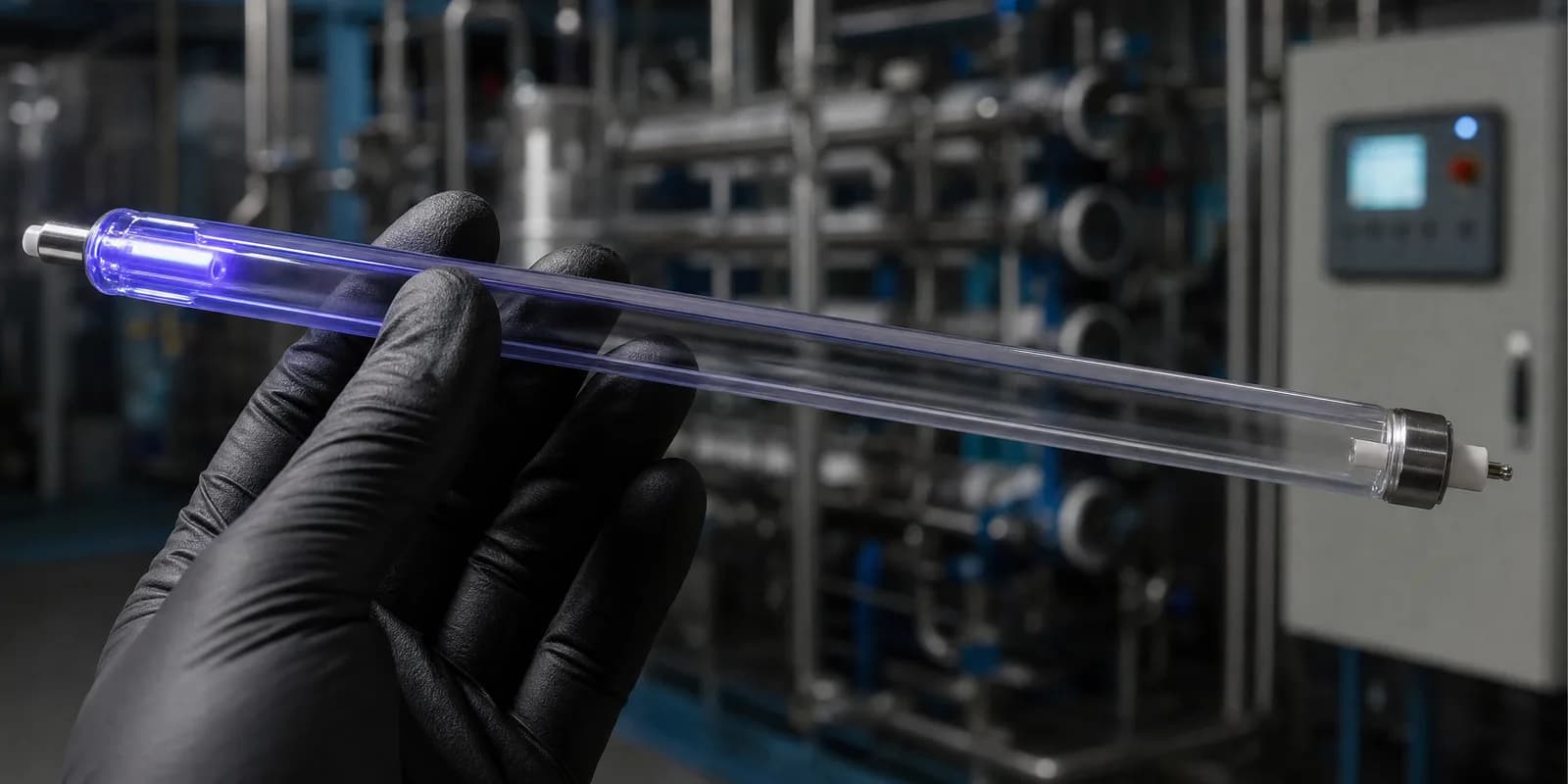
How a ProMinent DULCODES UV reactor delivers dose
ProMinent's DULCODES LP (labelled Not certified on its chart) flow table prints no UV transmittance or dose basis; delivered dose depends on transmittance, flow, lamp age and sleeve, and the EPA says biodosimetry measures it.
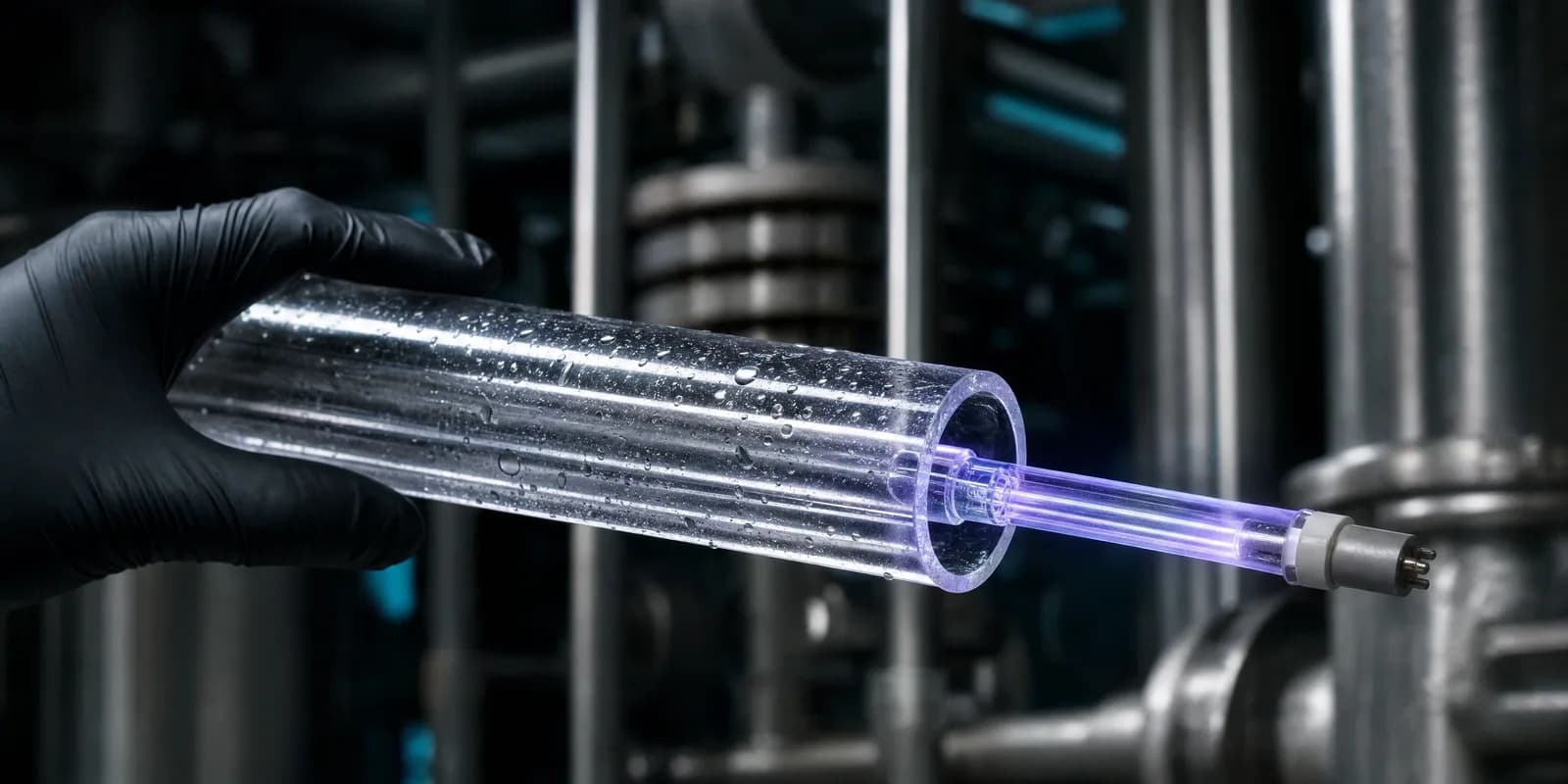
What decides the UV dose of the Viqua VH410-F22
The Viqua VH410-F22 states 16, 30 and 40 mJ/cm² at 34, 18 and 14 gpm; Viqua's manual bases them on 95% UVT, end of lamp life and 20 °C. For other water, prove the dose on site and ask Viqua.

Vontron ULP elements: what ultra-low pressure means
Vontron rates ULP household RO elements at 60 or 100 psi test points; flow and rejection hold only on each test line, so prove an element on your own pressure, recovery, feed and temperature.

SnowPure Electropure EDI: how the module removes ions
SnowPure's Electropure EXL modules polish RO permeate by electric field; purity and recovery depend on feed, voltage and concentrate route, so prove them on the water and terms agreed with SnowPure.
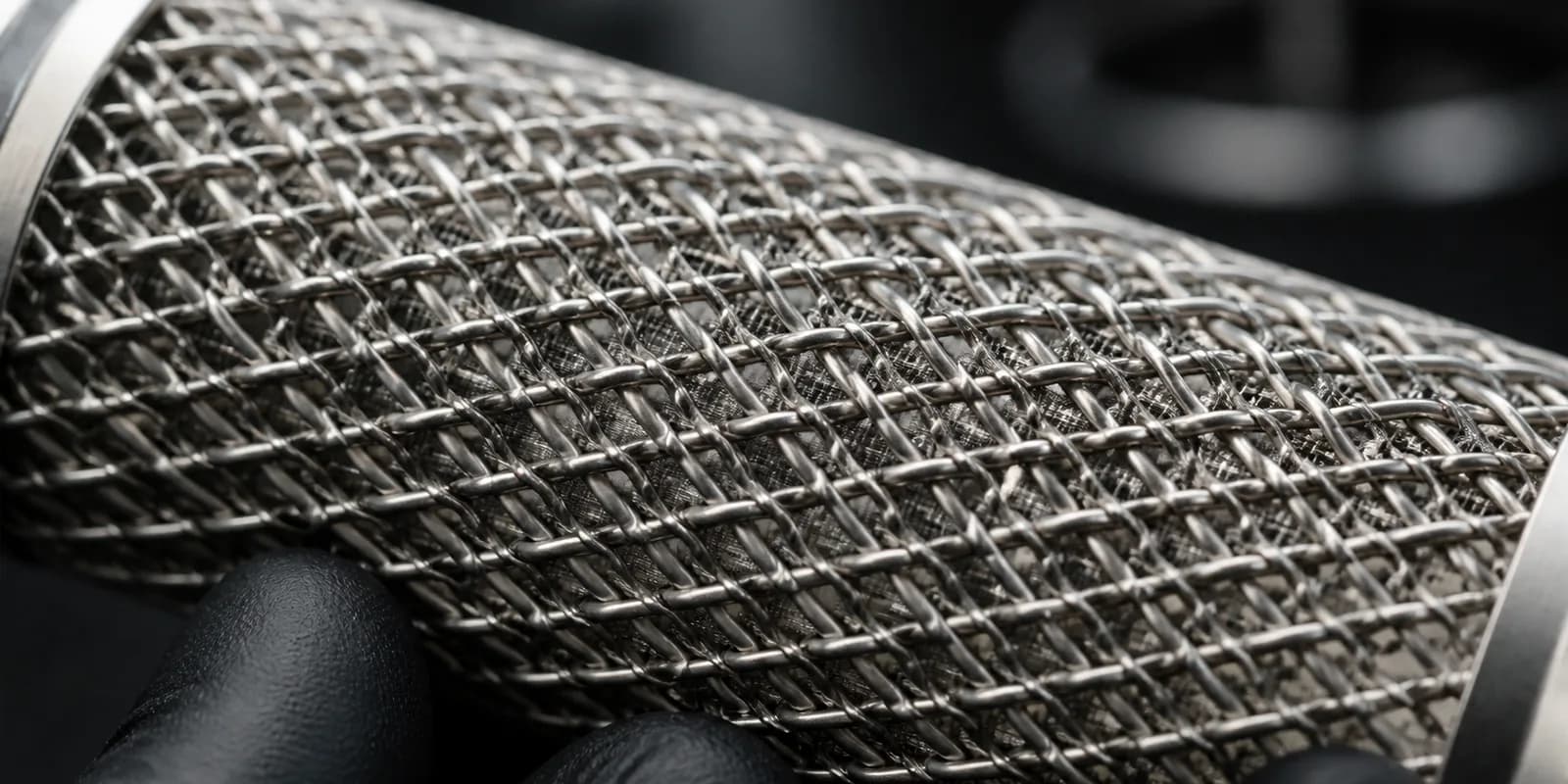
How the Filtersafe Trident E screen filter cleans itself
Filtersafe's Trident E screen filter flushes on differential pressure, a timer or by hand while online. Documents retrieved give the cycle and a minimum flush volume, but no retention figure, wear test or flush frequency.
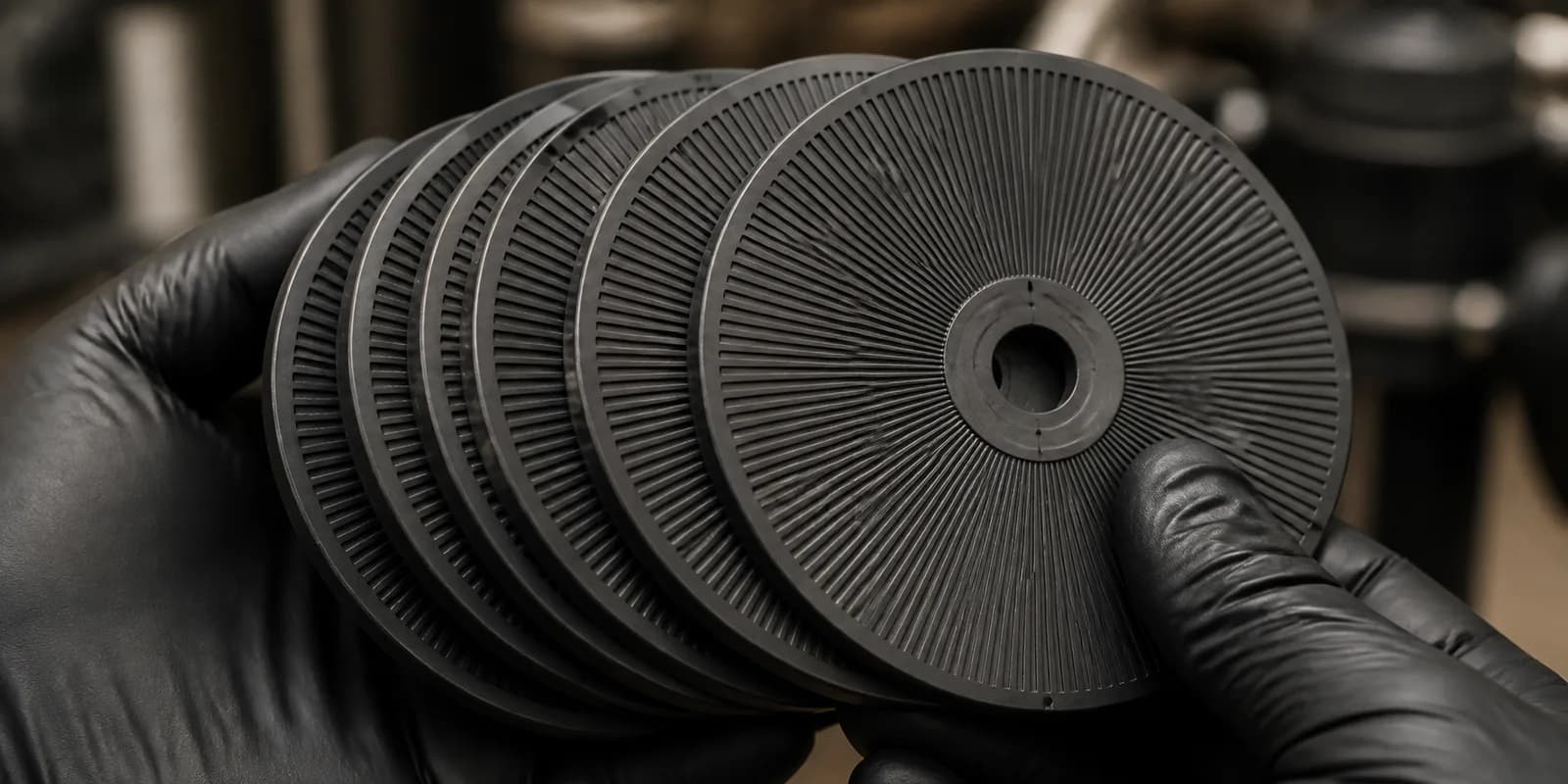
Amiad Spin Klin disc filter mechanics versus sand
Spin Klin disc filters clean by releasing and spinning the stack. Amiad's 2-inch and 3-inch manuals call for more back-flush pressure at finer grades, and its retrieved documents print a grade, not a removal rating.